
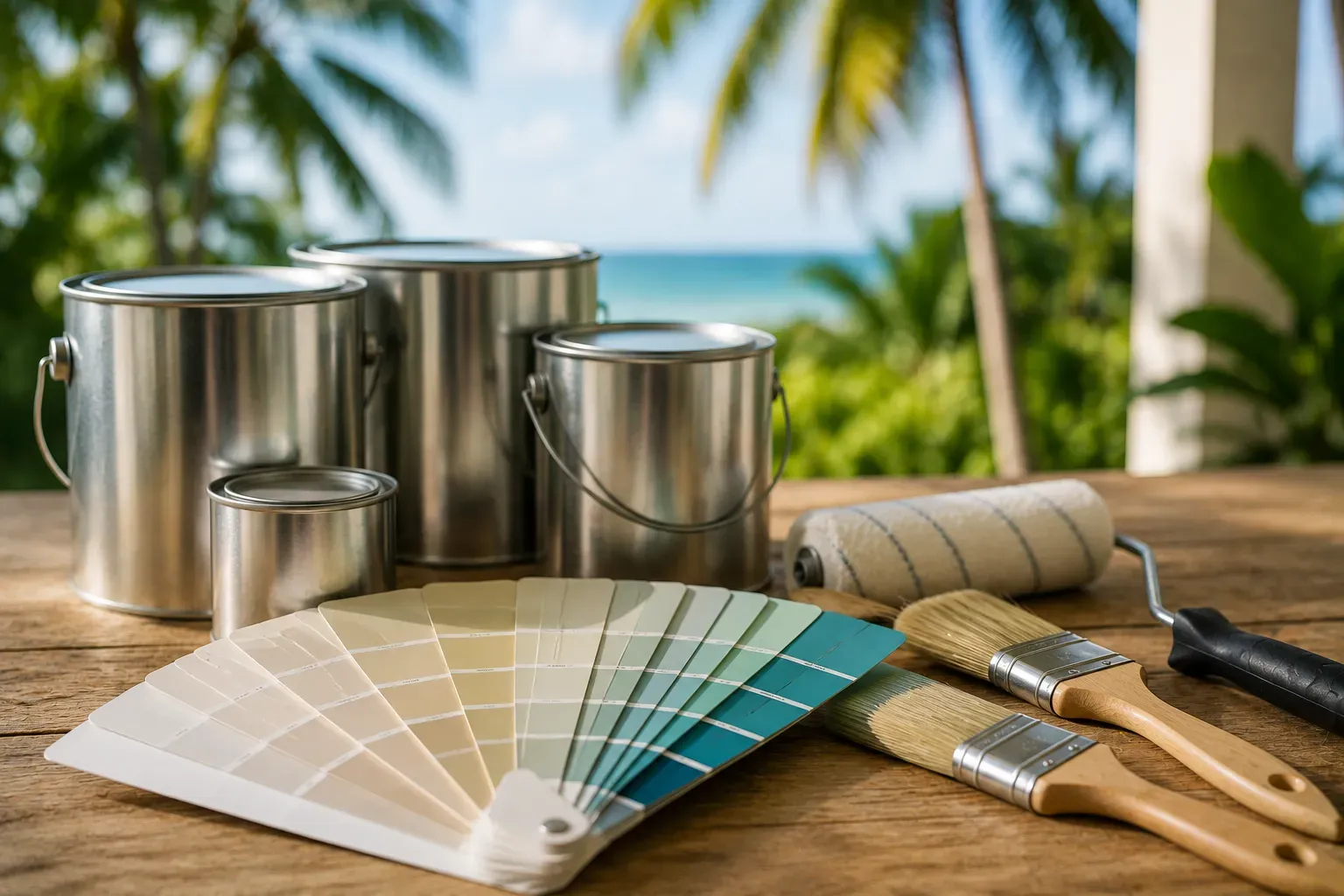
Paint that works fine in a temperate climate can fail fast on Koh Samui. The enemies here are specific: months of heavy humidity, intense UV, driving rain, and — near the coast — salt in the air. Choose paint for those conditions and walls stay good for years. Choose on price alone and you'll repaint within two.
Exterior walls: 100% acrylic, nothing less
For rendered and concrete exterior walls, the baseline is a quality 100% acrylic exterior paint. Acrylic stays slightly flexible as walls heat and cool, which matters in a climate where a facade can go from monsoon-soaked to oven-hot in a day. Look for three things on the tin:
- UV resistance — tropical sun fades cheap pigments quickly, especially dark and bright colours.
- Anti-fungal / anti-algal protection — shaded and north-facing walls grow black mould and green algae in the wet season.
- Water resistance with breathability — the film must shed rain but let moisture inside the wall escape, or it blisters.
The major brands sold in Thailand all offer paints in this category — the top exterior line of any of them will outperform the budget line of every one of them. Where the money goes matters more than the logo on the tin.
Interior rooms: match the finish to the room
- Bathrooms and kitchens: anti-mould, wipeable paints. Daily steam plus island humidity is exactly what mould-inhibiting formulas exist for.
- Bedrooms and living rooms: low-odour, low-VOC water-based paints. They're pleasant to live with and rooms are usable the same evening — important if you're repainting a rental between guests.
- Hallways and children's rooms: washable matt or eggshell. Flat budget paint marks the first time a bag brushes the wall.
The part the tin can't fix: preparation
No paint survives a bad substrate. In this climate that means: mould killed and washed off (not painted over), cracks cut out and filled, chalky old paint sealed with the right primer, and damp problems fixed at the source first. This is most of the real work in exterior painting on Koh Samui — the topcoat is the easy part.
Rule of thumb: on an exterior job, if a quote seems cheap, the savings are usually hiding in the preparation and the paint grade — the two things you can't see once the job is "done".
Salt air near the beach
Properties close to the sea need extra attention on metal: gates, railings and steel fences should be rust-treated and primed with a metal-specific primer before topcoating, or corrosion bleeds through within months. For walls, rinse-downs and good film thickness (two full coats, not one stretched one) make the difference.
What we actually recommend
It depends on your walls, which is the honest answer. When we quote a job, we name the exact product and grade we'd use and why — and if you'd rather buy your own paint, we'll tell you what to ask for at the store. Labour-only hiring is normal for us: see how our pricing works.