
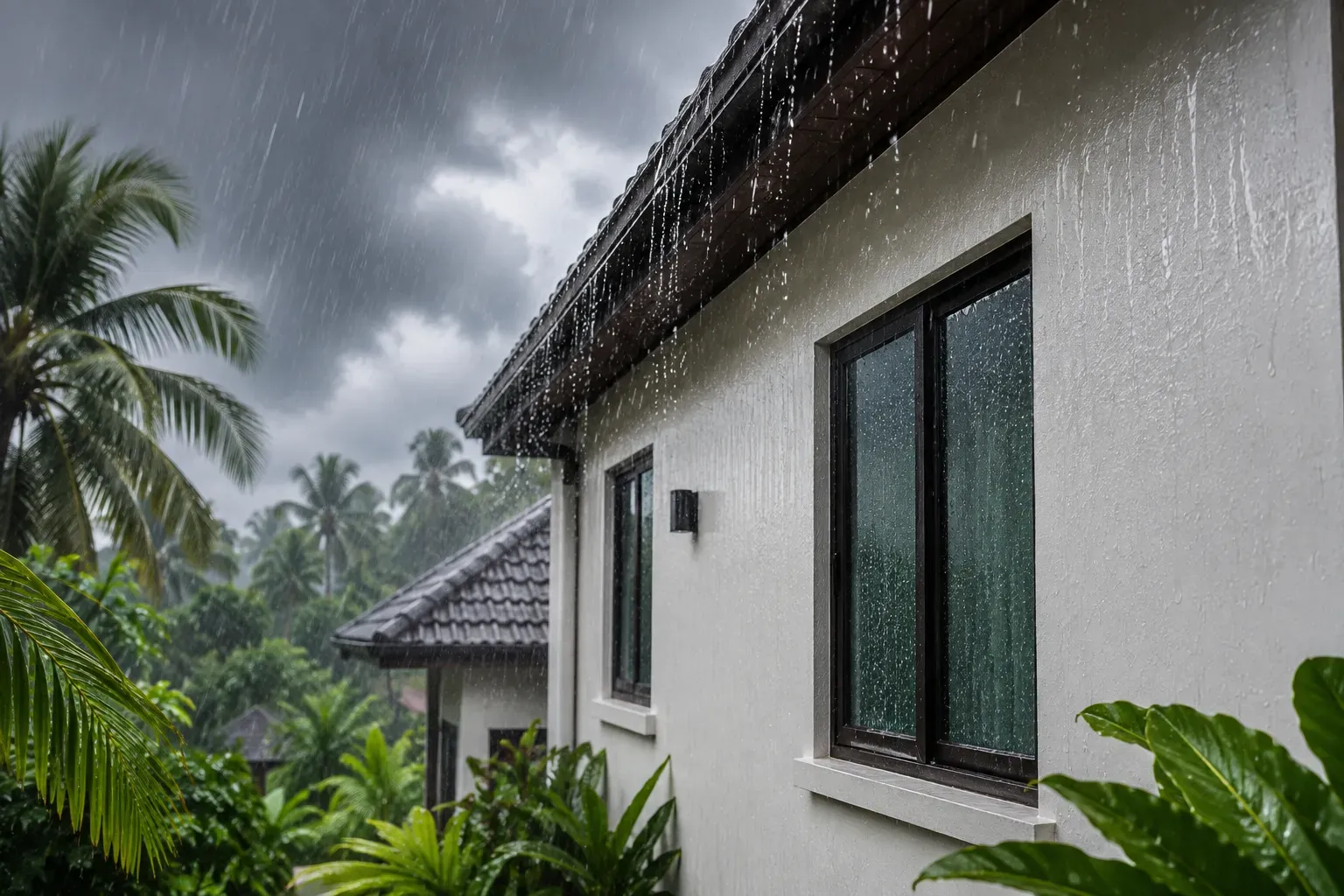
Koh Samui gets its heaviest rain late in the year, and a facade problem that was invisible in March becomes a stained, peeling wall by December. The good news: almost all rainy-season damage starts from a short list of causes you can check yourself.
1. Hairline cracks are doors for water
Render cracks as buildings settle and as walls expand and contract in the heat. A crack you can barely see still lets driven rain into the wall. The water then pushes outward as the wall dries — which is why paint blisters and flakes around cracks first. Before the season: walk the facade in low morning light (cracks shadow well), and have anything wider than a hairline cut out, filled and sealed.
2. Chalky paint no longer protects
Rub a hand over old exterior paint. If your palm comes away dusty, the paint has oxidised into chalk — it's no longer a waterproof film, just a coloured powder. Rain soaks straight through it into the render. Chalky walls need washing and a stabilising sealer before repainting; paint applied straight over chalk peels off in sheets, often within one wet season.
3. Mould and algae love the shaded side
The wall that never gets direct sun — often the north side, or anywhere behind trees — stays damp for days after rain. That's where black mould and green algae establish. They aren't just cosmetic: their growth holds moisture against the paint film and slowly breaks it down. Kill and wash off growth before the season, and use an exterior paint with anti-fungal protection when repainting. More on paint choice in our guide to tropical-climate paints.
4. Water needs somewhere to go
Blocked gutters, cracked copings on boundary walls, and downpipes that dump water against the base of a wall cause more paint failure than bad paint does. Ten minutes clearing gutters and checking where water lands during the first big rain can save a repaint.
Timing tip: the best months to repaint an exterior are the drier ones — roughly February to September. Walls need to be dry when painted and stay dry while curing. Booking exterior work for the dry season and interior work for the wet season is exactly how we schedule the year.
When repainting is the right answer
If the facade shows widespread chalking, multiple crack repairs, or paint lifting at edges, patching becomes false economy — each rainy season adds damage faster than touch-ups fix it. A proper exterior repaint with real preparation resets the clock for years. Send us photos of your walls and we'll tell you honestly which side of that line your property is on — quotes are free, and the labour rate is published right here.